Oak Skirting Boards and Mouldings: How to Choose the Right Profiles for Your Home
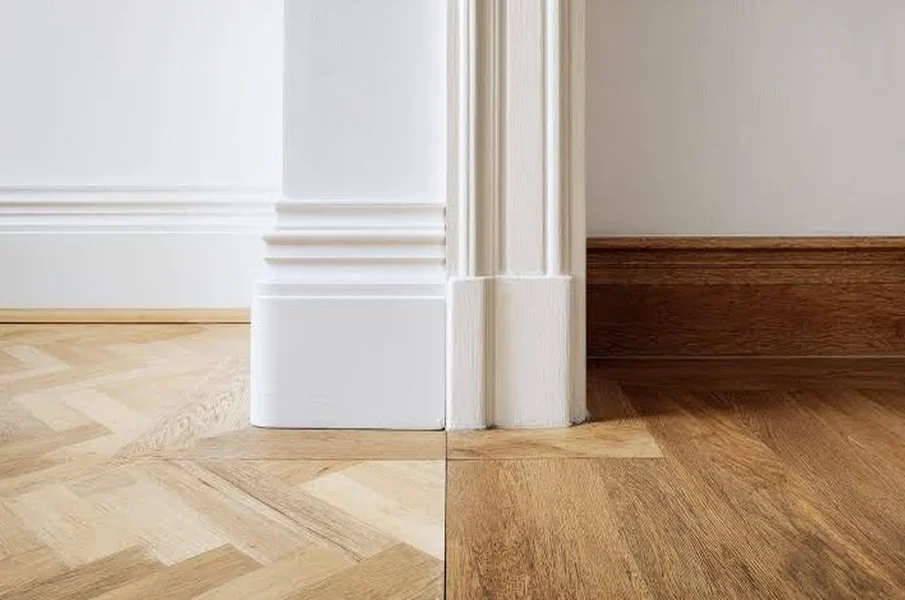
Oak skirting boards, architrave, and finishing mouldings are the details that determine whether a timber interior feels resolved or incomplete. In a home where oak flooring, oak doors, or oak staircase components have been specified, extending that material through to the skirting boards and architrave creates a coherent scheme that reads as deliberately designed.
Getting the profile choice right and maintaining consistency across the property are the two decisions that make the difference between a result that looks considered and one that looks assembled. This guide covers the principal skirting and moulding profiles available in solid oak, how to choose between them, and the practical decisions to make before ordering.
Skirting Board Profiles: What Each One Looks Like and Where It Works
Solid oak skirting boards are available in several profiles, each with a different visual character suited to different property types and interior styles:
- Ogee: a classical S-curve profile with a flowing, decorative line; the most widely used traditional skirting profile in UK period properties, Victorian and Edwardian terraces, and Shaker style interiors
- Torus: a semi circular raised bead with a flat back; a softer, more understated traditional profile that suits both period and transitional interiors without the stronger decorative character of ogee
- Chamfer: a clean angled top edge; contemporary in character and suited to modern interiors, handleless kitchens, and new build properties where minimal detail is the governing aesthetic
- Square edge: a fully flat faced profile with no shaping; the most minimal option, suited to contemporary and architectural interiors where the skirting is intended to be as unobtrusive as possible
- Pencil round: a small radius rounded top edge; an understated transitional profile that works in both modern and period settings
The profile choice should be made once and applied consistently across all rooms and across both skirting and architrave throughout the property. Mixing profiles between rooms or between the skirting and architrave in the same room produces a visual inconsistency that is immediately apparent even to people who cannot identify the source of the problem. A full range of solid oak skirting and architrave is available from UK specialists in all principal profiles in American white oak, supplied as individual lengths and as door sets.
Oak Architrave: Matching to the Skirting
Architrave frames door and window openings, covering the joint between the lining or frame and the wall plaster. It should always be specified in the same profile and species as the skirting throughout any given space. A room where the skirting and architrave are in different profiles, or where one is solid oak and the other is painted MDF, reads as an inconsistency regardless of how good the individual components are. Where the intention is a natural timber finish throughout, both skirting and architrave must be solid oak in the same profile, grade, and finish for the scheme to work visually.
Finishing Mouldings: What They Are and What They Do
Beyond skirting and architrave, a range of smaller moulding profiles serve specific finishing functions in a timber interior:
- Scotia and quadrant: cover the expansion gap between oak flooring and skirting boards; essential in any room where solid or engineered oak flooring has been laid, as the floor must be free to expand and contract seasonally without being constrained by the skirting
- Glazing bead: retains glass in a door panel or window frame; must be specified to match the rebate depth of the specific door or frame
- Corner bead: protects and finishes external corners on timber panel installations
- Panel bead and flat strip: covers joints in wall cladding and provides a neat edge detail at panel junctions
The solid oak mouldings range covers all of these profiles in American white oak, sized for standard UK construction applications and available for direct delivery from stock.
Matching Oak Mouldings to the Wider Timber Scheme
In a home where oak flooring, oak stair treads, and oak doors have been specified, the skirting, architrave, and finishing mouldings should be sourced from the same species to maintain visual consistency across the scheme. American white oak is the most widely available species across all these product categories in the UK and provides the best cross product tonal consistency. Mixing species, for example European oak skirting alongside American white oak flooring, typically produces a visible colour and grain mismatch that is particularly apparent at the point where the floor meets the skirting board.
Frequently Asked Questions
Should skirting and architrave always match?
Yes; specifying the same profile in both products across the whole property creates a visually coherent scheme, while mixing profiles between skirting and architrave reads as an inconsistency rather than a deliberate design choice.
What is the difference between a scotia and a quadrant moulding?
Both cover the expansion gap between oak flooring and skirting; a quadrant has a simple quarter circle cross section while a scotia has a more refined concave S-curve profile that looks slightly more elegant at close quarters.
Can solid oak skirting boards be painted?
Yes, solid oak skirting can be painted, though priming is essential before applying paint to ensure adhesion; for a fully painted scheme, an oak veneer or MDF skirting is often more cost effective as the grain character of solid oak is lost under paint.
How do I calculate how much skirting I need?
Measure the perimeter of each room in metres, subtract the width of each doorway, add ten percent for waste from mitre cuts at corners, and order lengths that minimise the number of joints in long runs.
Final Thoughts
Oak skirting boards, architrave, and finishing mouldings are the details that determine whether a timber interior feels finished or unresolved. Choosing a consistent profile across the property, matching the species to other oak elements in the scheme, and using the correct finishing mouldings to cover expansion gaps and edge details are the practical steps that produce a result that rewards the investment in real oak over painted alternatives.
Specialist suppliers of solid oak skirting and finishing mouldings carry all principal profiles in American white oak for immediate UK delivery.