
Tree Removal in Singapore for Safe and Efficient Clearing Services
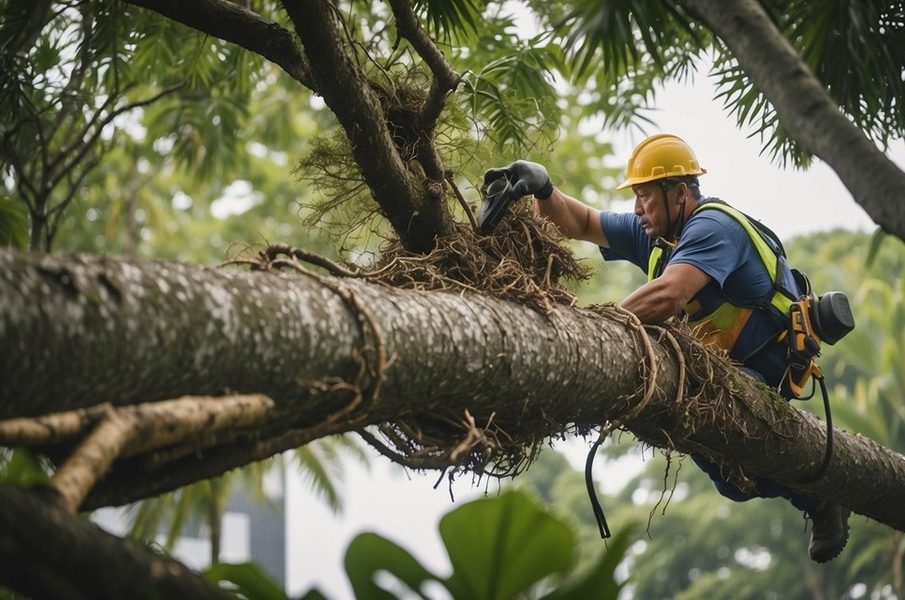
Tree removal shapes the way Singapore balances its reputation as a garden city with the practical demands of urban development, infrastructure maintenance, and public safety. The island’s tropical climate drives rapid growth in hundreds of native and introduced species, and that growth sometimes places trees in conflict with buildings, power lines, and pedestrian paths. Trained arborists and clearing crews step in where nature and the built environment collide.
Why Trees Need to Come Down
Singapore’s National Parks Board (NParks) oversees the management of roadside trees and those within parks and nature reserves. When a mature tembusu or rain tree develops structural weakness, or when roots heave through pavement, removal becomes the safest course of action. Storm damage, fungal disease, and pest infestations also force the hand of property owners and municipal planners.
Construction projects account for a significant share of tree felling Singapore contractors handle each year. Residential developments, MRT line extensions, and road-widening schemes require site clearance before ground-breaking. In these cases, developers must obtain permission from NParks and, where possible, transplant healthy specimens to new locations rather than fell them outright.
How Professional Crews Carry Out the Work
A qualified tree removal services team follows a strict sequence. The process begins with a site assessment, during which arborists evaluate the tree’s species, height, canopy spread, root structure, and proximity to utilities or structures.
- Risk assessment: Crews identify overhead cables, neighbouring buildings, and underground services before selecting a felling direction.
- Sectional dismantling: For trees near structures, climbers remove branches in sections, lowering each piece on ropes to prevent damage below.
- Crane-assisted removal: Large specimens in tight spaces require crane operators who coordinate with ground crews to lift trunk sections clear of obstacles.
- Stump grinding: After the trunk is down, a grinder reduces the stump to wood chips, leaving the ground level for replanting or construction.
- Debris disposal: Branches, leaves, and trunk sections are chipped on site or transported to licensed recycling facilities.
Each step demands specific equipment. Chainsaws, rigging systems, cranes, and wood chippers form the standard toolkit. Operators hold certificates in chainsaw use, working at height, and first aid.
Regulations Governing Tree Extraction in Singapore
Singapore’s Parks and Trees Act protects trees with a girth exceeding one metre at a height of 1.3 metres from the ground. Anyone who cuts, damages, or removes such a tree without written approval from NParks faces fines of up to S$50,000. The Heritage Tree Scheme offers additional protection to specimens of exceptional size, age, or historical significance.
Property owners planning tree removal on private land must submit an application through NParks, including a detailed arborist report. The process takes several weeks, and NParks may impose conditions such as replacement planting at a prescribed ratio. Failure to comply with these conditions can result in prosecution and additional penalties.
“A nation that destroys its soils destroys itself. We must keep our green cover for the generations that follow.” – Lee Kuan Yew, founding Prime Minister of Singapore
Lee Kuan Yew’s decades-long commitment to greening Singapore underpins the regulatory framework that governs tree dismantling and land clearance to this day.
Choosing the Right Contractor
Selecting a contractor requires more than comparing quotes. Property owners and facility managers should verify the following before signing a contract:
- ISA certification: The International Society of Arboriculture sets the global benchmark for tree care professionals.
- Insurance coverage: Public liability and worker compensation policies protect clients from financial exposure if an accident occurs.
- NParks track record: Contractors with a history of approved applications understand the permitting process and can navigate it on behalf of clients.
- Equipment standards: Well-maintained machinery reduces the risk of mechanical failure during high-risk operations.
- Waste management plan: Responsible contractors recycle timber and green waste rather than sending it to landfill.
Word-of-mouth referrals from landscape architects and property management firms remain one of the most reliable ways to identify competent operators. Online reviews and completed project portfolios also help property owners gauge the quality of a contractor’s work.
Environmental Considerations
Singapore’s Urban Redevelopment Authority requires environmental impact assessments for large-scale developments. These assessments evaluate the ecological value of trees earmarked for removal and propose mitigation measures. Arborists often recommend transplanting mature trees where feasible, a technique that involves root-pruning months in advance, then lifting the tree with a crane and relocating it to a prepared site.
The city-state plants tens of thousands of trees each year under its OneMillionTrees movement, launched in 2020 with a target completion date of 2030. This programme offsets losses from development and natural attrition, ensuring that canopy cover continues to expand across the island. Native species such as the Malayan banyan, sea apple, and jelutong receive priority in replanting schemes.
When to Act
Delayed action increases risk. A tree with visible decay, a leaning trunk, or exposed roots poses a direct threat to people and property. Wet season storms between November and January bring heavy rainfall and gusty winds that topple weakened trees onto roads, vehicles, and homes.
Property owners who spot warning signs should commission an arborist inspection without delay. Early assessment gives crews time to plan a controlled removal rather than respond to an emergency. Engaging a professional tree removal company in Singapore ensures the work meets regulatory standards, protects surrounding infrastructure, and keeps people safe through every stage of tree removal.