Why I’d Rather See an Old Fence Properly Maintained Than a Cheap New One
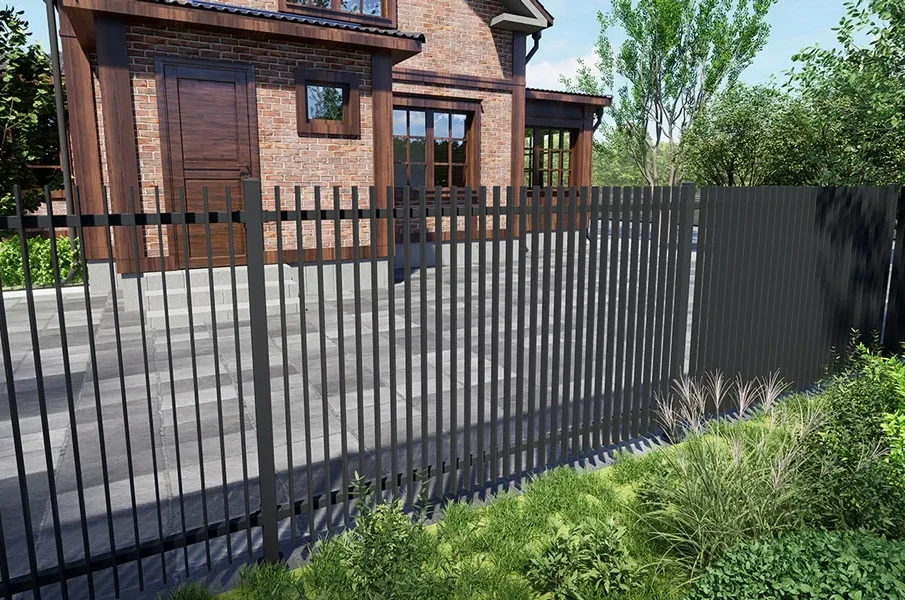
I have seen fences that have been standing for 20 years that I would trust through another Yorkshire winter before some that were installed two years ago. Age gets blamed for an awful lot in this trade, but it is a poor measure of quality. A well-built run of garden fencing does not suddenly become useless because it looks weathered, while a shiny new fence is no guarantee that what is underneath it has been done properly.
That matters when householders are deciding whether to repair an existing boundary or replace it.
New feels safer.
It isn’t always better.
I’ve worked around enough old fencing to know that appearances can be deceptive. Timber turns grey. Boards pick up marks. Concrete develops stains. Small splits appear. Moss grows around the bottom.
None of that tells me whether the fence is structurally sound.
Give me stable posts, decent rails and healthy timber and I can work with quite a lot.
Give me a beautiful new panel attached to an inadequate post and I’m considerably less impressed.
Some older fences were built with a lot of timber
There is no golden age of fencing. Bad work existed 20 or 30 years ago just as it does now.
But you occasionally come across an older closeboard fence and immediately notice how substantial it is.
The posts are sensible dimensions. There are decent rails between them. The feather edge boards have been fixed properly. The gravel boards have kept the bottom of the fencing away from constant contact with wet soil.
It may not look fashionable anymore.
Structurally, though, there can be very little wrong with it.
This is where replacement for replacement’s sake makes no sense to me.
If a fence has already survived years of rain, frost, dry summers and strong winds, that history tells you something. Inspect the vulnerable parts and you may find there is plenty of life left in it.
Maintenance can be a much better investment than starting again.
Cheap fencing usually saves money somewhere
There is nothing wrong with wanting a competitive price.
I don’t believe every homeowner needs the most expensive fencing system available. In fact, I would rather install modest materials properly than premium materials badly.
But there is a point where a quote becomes cheap because something has been removed from the job.
The question is what.
You can reduce the specification of the timber. You can use smaller posts. You can reduce the amount of concrete. You can dig shallower holes. You can save time on preparation. You can rush alignment. You can use cheaper fixings.
Some of those differences are difficult for a homeowner to see once the job is finished.
A post hole is the obvious example.
Nobody walks around admiring one because it disappears as soon as the installation is complete.
Yet the depth and stability of that hole may have more influence on the life of the fence than the decorative finish everybody can see.
A fence can look excellent in photographs on the afternoon it is installed.
Ask me how it looks after its fifth winter.
That’s the test I’m interested in.
Weathered timber isn’t necessarily bad timber
People sometimes look at a silver-grey timber fence and assume it is rotten.
It might be.
But colour alone doesn’t tell you that.
Outdoor timber naturally changes appearance as it is exposed to sunlight and weather. Surface checking can develop. Stain fades. Areas facing different directions can weather at different rates.
Structural deterioration is another matter.
Rot tends to reveal itself through softness, loss of strength and material breaking down. With posts, I am particularly interested in what is happening around ground level.
That’s an area worth inspecting carefully because conditions there are difficult for timber.
A post can look healthy higher up while deteriorating where it enters the ground.
Rails deserve attention too. So do the ends of boards, fixing points and anywhere moisture is repeatedly trapped.
If those components remain sound, I am not going to condemn a fence because it looks its age.
Gardens don’t need to look newly unwrapped.
Repairability has value
One advantage of many traditional fencing systems is that individual components can be repaired.
A damaged feather edge board doesn’t require an entire boundary to disappear.
Neither does one failed rail.
Even an isolated post failure may be something that can be addressed without dismantling everything around it.
That modularity has value, particularly when household budgets are tight.
The sensible question isn’t, “Is this fence old?”
It is, “What has actually failed?”
There is a big difference.
A competent assessment of fence repairs should identify whether deterioration is localised or whether the same problem is developing throughout the structure.
If one post has failed because it has been sitting in unusually wet ground, repairing that section might give the boundary years more useful life.
If six posts of the same age are rotten at ground level and another three are starting to move, the economics change.
I don’t believe in repairing something simply because repair produces the smallest invoice today.
Sometimes replacement is the sensible long-term choice.
But I don’t believe in ripping out sound fencing simply because replacement produces the biggest job either.
The posts tell you more than the panels
If you’re comparing an existing fence with a potential replacement, spend less time thinking about panels and more time thinking about support.
Posts carry the load.
A solid fence catches a surprising amount of wind, particularly when it is tall. That force travels through rails and fixings before eventually reaching the posts and their foundations.
On an exposed boundary, those forces can be substantial.
Around Barnsley and elsewhere in South Yorkshire, garden conditions vary enormously. A sheltered boundary between established houses has a different job from a fence backing onto open ground at the edge of a development.
The same specification won’t necessarily perform equally well in both places.
This is why I dislike fencing being reduced to a price per panel.
The panel is only part of the system.
Post dimensions matter.
Spacing matters.
Footing depth matters.
Ground conditions matter.
Exposure matters.
Drainage can matter.
You could buy exactly the same panels for two gardens and produce two installations with completely different life expectancies depending on how the rest of the job is approached.
Gravel boards aren’t particularly exciting – which is why they’re useful
Nobody chooses a fence because they fell in love with the gravel board.
It is a functional component.
And functional components are often the bits that make fencing last.
Keeping timber fencing away from direct contact with damp soil can reduce deterioration at the bottom. A damaged gravel board can also be replaced without sacrificing the fencing above it, depending on the system.
Concrete gravel boards are common because they tolerate ground contact well, although their additional weight needs proper support.
Timber versions can suit other installations.
The point isn’t that one material is universally right.
It is that longevity often comes from fairly boring decisions.
Good drainage is boring.
Correct fixings are boring.
Adequate post holes are definitely boring.
They also matter far more than whatever colour happens to be fashionable this year.
Maintenance isn’t the same as repeatedly covering problems
There is a distinction worth making here.
Maintaining an older fence does not mean throwing money at a structure that is falling apart.
Nor does it mean painting over rot.
Preservative treatments and finishes can help protect appropriate timber, but they cannot restore structural strength to wood that has already decayed.
If you can push a screwdriver deeply into a rotten post, another tin of treatment isn’t going to turn it back into solid timber.
Maintenance works best before serious deterioration.
Keep vegetation under control where it is putting pressure on the boundary. Deal with loose boards before wind starts moving them around. Repair failed fixings. Keep an eye on posts. Don’t let soil build up unnecessarily against vulnerable timber.
Small interventions can prevent larger ones.
Neglect followed by an emergency coat of paint is not maintenance.
New materials still depend on old-fashioned workmanship
Modern fencing materials can be excellent.
Composite is a good example. It appeals to homeowners who want a consistent appearance with less of the routine maintenance associated with timber, and there are situations where composite fencing makes a lot of sense.
But composite hasn’t abolished physics.
The posts still need to be stable.
The system still needs installing correctly.
Wind still exists.
Ground still moves.
Gates still put leverage through supporting posts.
A premium material cannot compensate indefinitely for poor groundwork.
The same principle applies across fencing generally. We have different products, improved treatments and more choices than homeowners once had, but the fundamentals haven’t changed much.
Support it properly. Fix it properly. Specify it for the location.
Shortcuts have consequences.
Look at what you’re removing before deciding what to buy
If you’re considering replacing an older fence, inspect it before browsing new panels.
Push the posts gently and look for movement at ground level.
Check the rails.
Look at the bottom of the boards.
Open and close the gate.
Stand at one end and look down the fence line.
Check whether deterioration appears in one location or throughout the boundary.
You may confirm exactly what you suspected and find that replacement is overdue.
But you might discover something else.
Perhaps two posts need attention and everything between them remains solid. Maybe a section damaged by vegetation can be repaired. Perhaps the gate needs adjusting rather than replacing.
An old fence has one advantage a new fence can never offer: evidence.
It has already shown you how it performs in that garden.
It has stood in that soil, faced that prevailing wind and dealt with years of local weather.
If it has done all of that and remains structurally sound, don’t underestimate what you already own.
New fencing has to prove itself.
A good old fence already has.