Do S-Wave Curtain Designs Work for Small Rooms or Only Large Windows?
Key Takeaways
- A uniform-wave curtain design can work in both small and large rooms when properly specified.
- The s curtain system relies on track spacing, fabric weight, and installation accuracy.
- Proportion, fabric choice, and track positioning are critical in small rooms.
- Large windows naturally enhance the wave effect but are not a strict requirement.
- Poor measurements and incorrect fabric selection are the main causes of failure.
Introduction
A uniform-wave curtain design is often associated with wide glass panels and open-plan interiors. This perception leads to a common question: does the design only suit large windows, or can it function effectively in smaller rooms? The answer depends less on window size and more on execution. The s curtain system is engineered to produce consistent folds, but achieving that uniformity requires careful planning, especially when space is limited.
Examine how the system performs across different room sizes and what factors determine success.
How the Uniform-Wave System Works
A uniform-wave curtain design uses a specialised track and evenly spaced carriers to create continuous, symmetrical folds. Unlike traditional pleated curtains, the wave pattern is pre-defined by the hardware rather than manually arranged. The s curtain format ensures that the fabric flows in a consistent rhythm from one end to the other. This structure means the outcome is predictable, but also less forgiving. Any miscalculation in width, height, or fabric type will be visible across the entire span, regardless of room size.
Performance in Small Rooms
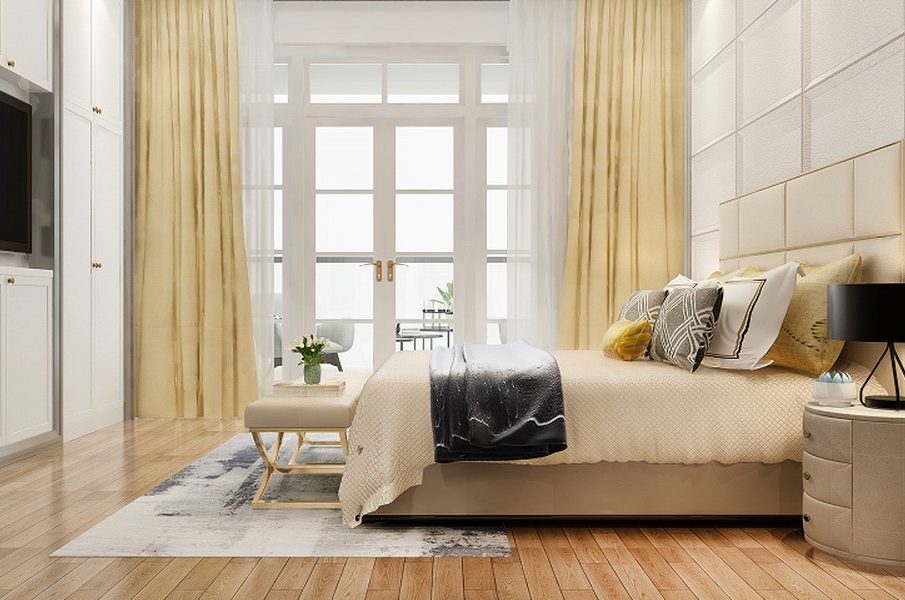
The main concern in smaller rooms is proportion. A uniform-wave curtain design can still work, but it must be scaled correctly. Overly thick fabrics or excessive fullness can make the space feel constrained. A properly specified s curtain should use lighter materials and controlled fabric volume to maintain the wave without overwhelming the room. Ceiling-mounted tracks are often recommended, as they create a vertical line that visually extends the space. Once done correctly, the system can make a small room appear more structured rather than crowded.
Another key consideration is stack-back space. Even though the folds are uniform, the curtain still requires space when fully opened. That said, in tight areas, insufficient allowance can block part of the window or reduce natural light. This situation is a planning issue rather than a limitation of the design itself.
Performance in Large Windows and Open Spaces
Large windows naturally complement a uniform-wave curtain design because the extended width allows the wave pattern to be fully expressed. The s curtain system performs with fewer constraints in these settings, as there is more room for fabric movement and stacking. Heavier fabrics can also be used without compromising the visual balance, which is often preferred in commercial or high-ceiling environments.
However, the advantage in larger spaces does not mean exclusivity. The system simply has more tolerance for variation. Minor inconsistencies in installation or fabric choice are less noticeable when spread across a wider span.
Key Factors That Determine Suitability
Room size alone does not determine whether a uniform-wave curtain design will work. The outcome depends on three primary factors: track configuration, fabric selection, and measurement accuracy. The s-curtain system requires precise spacing between carriers to maintain the wave pattern. Fabric weight must align with the track system to ensure smooth movement and consistent folds. Measurements must account for full coverage, stack-back, and ceiling height.
These factors must be tightly controlled in small rooms. Meanwhile, in larger rooms, there is more flexibility, but the same principles apply. Failure in any of these areas will result in uneven waves or functional issues, regardless of window size.
Conclusion
A uniform-wave curtain design is not limited to large windows. It can be successfully implemented in small rooms if proportion, materials, and installation are carefully managed. The s-curtain system delivers a consistent visual outcome, but it demands precision. Large spaces offer more flexibility, while small rooms require stricter control. Ultimately, the design works in both contexts, provided the technical requirements are met.
Visit De Art Studio to upgrade your interiors with a professionally installed s-curtain system that delivers a clean, consistent curtain design.