Garage Sheds for Properties Without an Attached Garage: What to Know Before You Buy
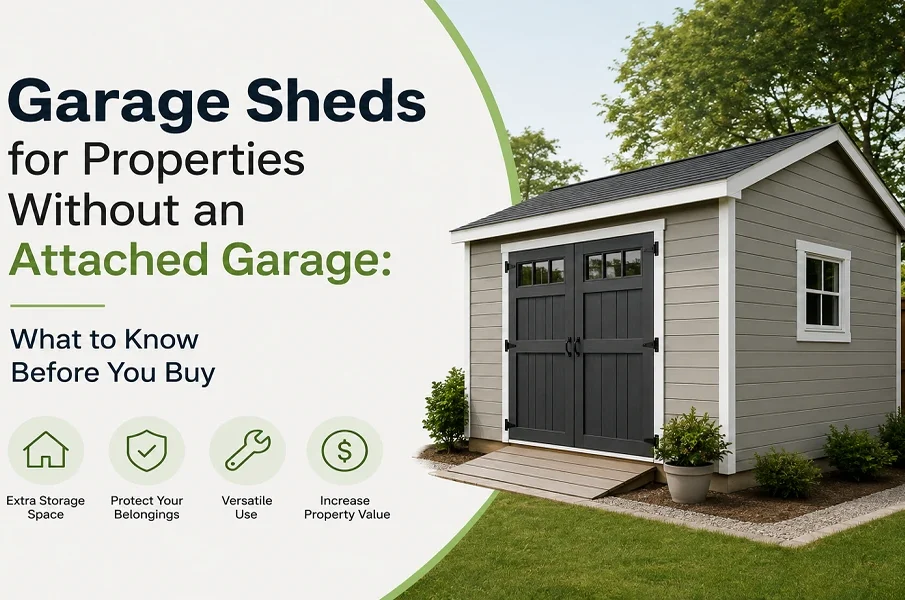
Not every property comes with an attached garage. Plenty of older homes, rural properties, and smaller lots were built before two-car garages became the standard. If you’re living in one of those homes, you already know the daily friction of it. You’re scraping ice off the windshield in January. You’re hauling groceries through the rain. You’re watching your tools, lawn equipment, and seasonal gear pile up in places they don’t belong.
That’s where garage sheds come in. They give you the covered, secure storage of a garage without the cost and disruption of building an addition onto your house. But before you buy one, there are a few things worth understanding so you end up with a structure that actually solves your problem instead of creating a new one.
Start With an Honest Look at What You Need to Store
The biggest mistake people make is buying based on price or looks before they’ve figured out what they actually need the space to do. Take a weekend and make a real list.
Are you parking a vehicle inside? If so, what kind? A compact car, a full-size truck, a riding mower, or an ATV all have different clearance and door-width requirements. A standard single-car garage opening is around 9 feet wide. If you’re trying to back a truck with extended mirrors through a narrower door, you’re going to be frustrated every time.
If you’re not parking a vehicle, think about what else is going in there. Lawn equipment. Bicycles. Holiday decorations. Tools. Spare building materials. Once you start listing it out, most people are surprised by how much they’ve been trying to cram into a corner of the carport or the back porch.
A good rule of thumb is to figure out how much space you need, then add 20 percent. You’ll fill it. Everyone does.
Understand the Difference Between a Garage Shed and a Storage Shed
This trips up a lot of buyers. A storage shed and a garage shed are not the same thing, and the differences matter more than you might think.
A storage shed is built for, well, storage. Hand tools, lawn equipment, boxes of holiday lights. The doors are usually narrower, the framing is lighter, and the interior height is often lower. It works fine for what it’s designed to do, but it’s not built to back a vehicle into.
A garage shed is built heavier. It has a wider door opening, taller interior clearance, and framing that can handle the daily wear of driving in and out. The floor is built to hold the weight of a vehicle. The door hardware is rated for more frequent use.
If you think you might ever want to park a vehicle, a riding mower, or a small tractor inside, buy the garage shed. It’s much harder to upgrade a storage shed after the fact than it is to start with the right structure.
Measure Your Site Before You Fall in Love With a Size
This is the step that gets skipped most often, and it causes the most headaches.
You need to know three things about your site before you buy. First, how much room do you actually have? Not what it looks like from the road. Get a tape measure and mark it out. Remember to account for overhangs, fence lines, and the space you need to open the doors and walk around the structure once it’s in place.
Second, how level is the ground? A garage shed needs a reasonably flat, stable base. If your site has a slope, you’ll need to address that before delivery. Some buyers build a gravel pad. Others have the site graded. Either way, factor that into your planning and your budget.
Third, how will you access it? If the delivery truck can’t get the structure to the spot you want, you have a problem. Make sure there’s a clear path from the road or driveway to your site, with enough width and height clearance for delivery.
Think About the Roof and the Weather It’ll Face
The roof is the part of your garage shed that takes the most abuse. Sun, rain, wind, and the occasional branch all land on the roof first.
Metal roofing is common on garage sheds. It’s durable, sheds water and snow well, and doesn’t need much maintenance over the years. Look for 29-gauge metal, which is the standard for solid residential and agricultural roofing. Anything lighter is more prone to denting and damage.
Shingle roofs are another option. They’re quieter in heavy rain and tend to blend in better with residential architecture. If you go this route, look for high-quality architectural shingles, not the thin three-tab style that curls after a few summers.
Either way, ask how the roof is attached to the walls. Hurricane straps are a sign of a builder who takes wind seriously. In a lot of the country, that’s not a luxury. It’s a necessity.
Pay Attention to the Floor
The floor is easy to overlook because it’s out of sight once the shed is in place. But if you’re parking equipment or storing heavy items in your garage shed, the floor is doing most of the work.
Look for floor joists that are sized and spaced to handle real weight. A common solid setup is 2×6 floor joists on 4×6 ground skids, with the joists set on close centers. That gives you a floor that doesn’t bounce or sag under load.
Pressure-treated wood anywhere it touches the ground is also important. Ground contact is where rot starts, and pressure-treated lumber resists that for years. If the builder can’t tell you how the floor is built, that’s a red flag.
Ask About Delivery and Installation Before You Commit
This is where a lot of buyers get surprised by extra costs and logistics they didn’t plan for.
Some sellers include delivery and setup within a certain radius. Others charge by the mile. Some drop the structure and leave. Others handle the full setup, leveling, and anchoring. The difference matters.
Ask specific questions. How far will they deliver for free? What happens if the truck can’t reach my site? Do they handle the leveling, or is that on me? Is anchoring included, or is that an add-on?
Get the answers in writing. A good dealer will be straightforward about what’s included and what isn’t. If you get vague answers, keep looking.
Don’t Forget About Access and Door Hardware
A garage shed is only as useful as its doors. If the doors stick, sag, or don’t latch properly, you’ll dread using the building.
Look at the threshold. A diamond-plate metal threshold at the door opening holds up to years of traffic and keeps the bottom of the door from dragging on the wood. It’s a small detail that tells you a lot about how the builder thinks about longevity.
Check the hinges and hardware. Heavy-duty hinges and hardware that won’t rust are worth asking about. Cheap hardware is the first thing to fail on a garage shed, and replacing it is a hassle you don’t need.
Consider How the Structure Will Look on Your Property
A garage shed is a big visual element on your property. It’s not something you can hide. So think about how it fits in.
Most builders offer a range of exterior colors. Traditional colors like black, white, tan, brown, and gray tend to age well and blend with most homes and outbuildings. Bold, unusual colors can look striking in a brochure, but they’re harder to live with long term and harder to resell if you ever move the structure.
Look at the siding options too. Some sidings are low-maintenance and hold their color for years. Others may need a fresh coat of paint or stain down the road. Ask what’s involved in keeping the exterior looking good, and be honest with yourself about how much maintenance you’re willing to do.
Ask About the Warranty
A good warranty tells you two things. It tells you the builder stands behind the work, and it gives you a sense of how long they expect the structure to last.
Look for a warranty that covers craftsmanship and materials under normal use. A six-year warranty is a solid benchmark in this industry. Read the fine print. Find out what’s covered, what isn’t, and what would void it.
Also ask what happens if you have a problem. Is there a local contact? Does someone come out to look at it, or are you on your own? The answer tells you a lot about what kind of experience you’ll have after the check clears.
Think About Whether You Want to Own It Now or Pay Over Time
Not everyone wants to, or is able to, pay cash for a garage shed up front. And not everyone who wants one owns the property they’re placing it on.
Rent-to-own is an option worth understanding. It doesn’t require a credit check. You make monthly payments over a set term, usually 36, 48, or 60 months. If you pay it off early, you can often save a meaningful amount compared to the full contract price.
If you’re renting your property, talk to your landowner before placing any structure. You’ll want clear permission in writing, and you’ll want to make sure there’s a clear access path that doesn’t cross someone else’s land. These are details that seem small until they become big.
The Bottom Line
A garage shed can change how you use your property. It gets your vehicle out of the weather. It gives your tools and equipment a real home. It clears the clutter out of your house and your head.
But only if you buy the right one for your situation. Take the time to figure out what you need to store. Measure your site. Ask hard questions about how the structure is built, how it’s delivered, and what happens after the sale. The right garage shed is a 20-year investment in how your property works. The wrong one is an expensive lesson.
Start with your needs, not the brochure. You’ll end up with a structure that actually earns its place on your property.