Was That Hail Bad Enough for an Insurance Claim?
Spring storms across central Oklahoma rarely give much warning. A line of cells rolls through, the yard turns white for ten minutes, and by evening the sky looks innocent again. The roof may tell a different story. The hard part is deciding whether that story is worth an insurance claim.
The answer depends on three readings of the same roof: what you see from the ground, what a trained inspector finds up close, and what the adjuster finally writes down. Homeowners in Mustang, Yukon and the wider Oklahoma City area often call on Streetside Roofing Solutions to help with the first two, since a roofer who works the same neighborhoods after every storm knows how local shingles tend to bruise. Knowing all three readings yourself makes every conversation that follows easier.
Plenty of claims go wrong even when the damage is real. The homeowner files too early, waits too long, or shows up to the inspection with nothing but a hunch. A little structure in the days after a storm changes that.
What the Ground View Misses
From the driveway, most hail damage is invisible. Asphalt shingles do not shatter like glass. They bruise, and a bruise on a roof twenty feet up looks like nothing at all.
What the ground view does offer is safety information. Downed lines, hanging branches and loose flashing are all visible from below, and they matter more than any shingle. Ready.gov’s severe weather guidance is a solid reference for the hours during and after a storm, when it is tempting to climb a wet ladder too soon. That temptation is worth resisting. A slick roof right after a storm is no place to look for hail marks.
Reading the Roof Up Close
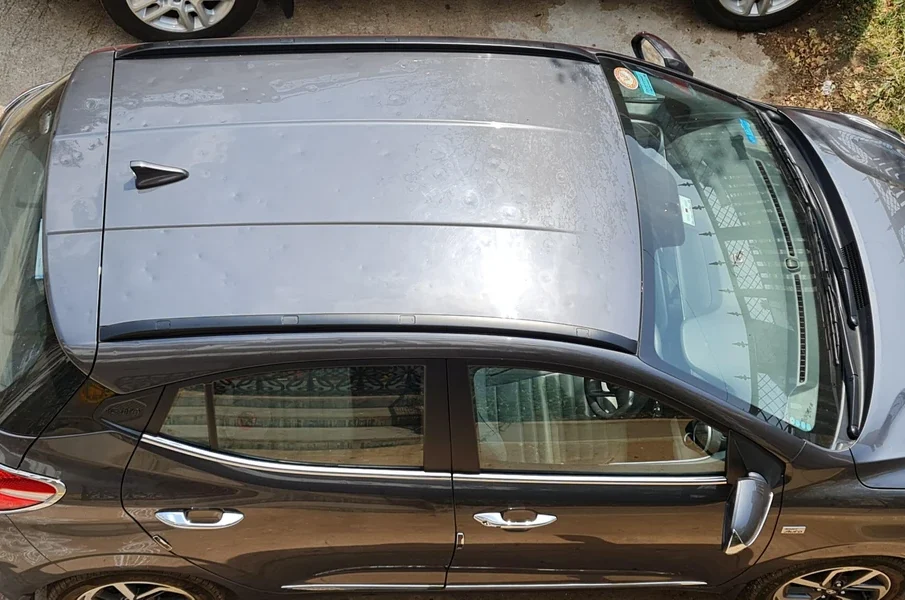
A trained inspector looks for hits that changed the shingle, not just marked it. A true hail strike often feels soft under the thumb, like a bruised apple. Granules get knocked loose and leave a dark spot where the mat shows through. On older shingles, the mat underneath may crack, which shortens the roof’s life even if it does not leak this year.
The difference between cosmetic and functional damage sits at the heart of most claims. A scuff that leaves the shingle intact may not qualify. A fracture that lets water reach the deck usually does.
Inspectors also check the rest of the property, because hail leaves evidence on softer materials that confirms size and direction:
- Dents on metal roof vents, turbine caps and pipe flashing
- Dings along gutter edges and downspouts
- Spatter marks on painted fences, decks and mailboxes
- Bent fins on the outdoor air conditioning unit
- Small piles of granules at downspout outlets
None of these proves shingle damage on its own. Together, they help build a picture an adjuster will take seriously. Slopes that faced the storm usually take the worst beating, so a careful inspection covers every face of the roof rather than the one that is easiest to reach.
Running the Numbers Before You Call
Many Oklahoma policies carry a separate wind and hail deductible, often written as a percentage of dwelling coverage rather than a flat dollar figure. On a home insured for $300,000, a 2 percent deductible means the first $6,000 comes out of your pocket. If the repair estimate lands near that number, a claim may not make financial sense.
Roof age matters too. Some policies pay replacement cost, while others pay actual cash value, which subtracts depreciation for age and wear. A fifteen year old roof on an actual cash value policy can produce a check far smaller than the cost of a new one. Under replacement cost coverage, insurers often hold back part of the payment until the work is finished, then release the rest once you send the final invoice.
Your declarations page spells all of this out. Reading it before any inspection saves a lot of surprises.
How the Adjuster Builds the Report
When the adjuster arrives, the process is more methodical than many people expect. A common approach marks off a test square, typically ten feet by ten feet, on each slope and counts qualifying hits inside it. The threshold for replacement varies by carrier, so a roof with scattered damage might earn repairs on one slope and a full replacement on another.
Being home for the inspection helps. So does having your roofer there, since two people looking at the same shingle can disagree, and it is far easier to settle that on the roof than through email afterward. Photos taken soon after the storm, with dates, support the timeline.
The written estimate should list more than shingles. Tear off, underlayment, drip edge, starter strips, ridge cap, vents and any rotted decking all belong on it. Code upgrades are a separate question that depends on whether your policy includes ordinance or law coverage. If items get missed, a roofer can submit a supplement with documentation once the old roof comes off and hidden conditions appear.
Signatures Worth Slowing Down For
After big storms, door knockers move through neighborhoods quickly. Some are honest. Some ask homeowners to sign paperwork on the porch.
One document deserves extra care. The National Association of Insurance Commissioners explains in its guide on what to do before and after a storm that an assignment of benefits lets a contractor deal with your insurer directly and collect payment, and that you are not required to sign one to get repairs done. That convenience comes with a real loss of control over your own claim.
Two other habits help. Confirm that any roofer is registered with the Oklahoma Construction Industries Board, and treat any offer to “cover” or waive your deductible as a warning sign rather than a favor.
When the Two Reports Disagree
Sometimes the adjuster’s numbers and your roofer’s findings simply do not match. That is not the end of the road. You can ask for a reinspection, ideally with your contractor present. Many policies include an appraisal clause, where each side hires an independent appraiser and an umpire settles the gap.
If communication stalls entirely, the Oklahoma Insurance Department accepts consumer complaints and can push a slow file forward. Most disagreements never get that far, though. They tend to resolve once both sides are standing on the same roof, looking at the same bruise, with good photos in hand.
A hailstorm takes ten minutes. Sorting out what it did to your home can take weeks. Homeowners who understand the ground view, the close inspection and the adjuster’s math are the ones who come out of that process with a roof that matches what they paid to protect.